-
Popularisation of science
- ⋅
- 16/07/2026
- ⋅
- Reading time approx. 3 min
Przyszłość konserwacji żywności: Innowacje dla zdrowia i zrównoważonego rozwoju
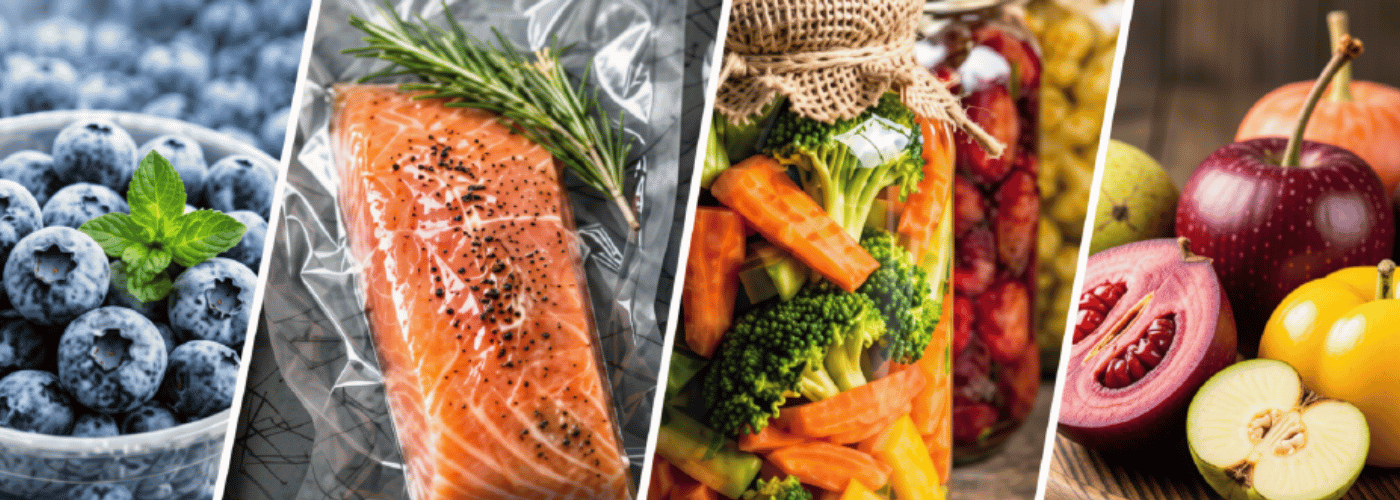
Traditional food preservation methods that remain dominant today, such as thermal processing and the use of chemical preservatives, may be regarded as a legacy of the 19th and early 20th centuries. Although these methods played a crucial role in the unprecedented increase in food availability, their limitations are becoming increasingly evident in the 21st century. Thermal processing may reduce the nutritional value and sensory quality of food products, while preservation methods using chemical preservatives essentially yield highly processed foods that may adversely affect human health and contribute to the development of civilizational diseases.
In this context, a paradigm shift in food preservation methods is gaining increasing importance, as it responds to contemporary challenges - related to healthy nutrition and following principles of sustainability.
In the popular online science report titled Next Generation Food Preservation Methods for High Quality Foods in the Sustainable Society and Circular Economy Epoch, authored by Aleksandra Drozd-Rzoska and Agata Angelika Sojecka, innovative food preservation methods are presented that align with the principles of the 5th Industrial Revolution, the Circular Economy, and Sustainable Development.
The report addresses the following issues:
- The crisis of traditional methods: Traditional food processing extends product shelf life, but it may also pose health-related risks and contribute to substantial food losses and waste at both the production and consumption stages.
- The innovative approach - “fresh-like” food: Innovative preservation methods make it possible to maintain high quality, sensory attributes, and health-promoting properties while significantly extending shelf life.
- Compatibility with the Circular Economy rules: New technologies may reduce energy consumption and limit food losses, thereby fitting well into the model of a sustainable society and sustainable production and consumption.
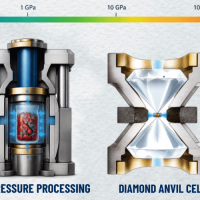
- Market-validated technologies - SCF and HPP: The article discusses two innovative food preservation methods that have already been confirmed in market applications: supercritical fluid technology (SCF) and high-pressure processing (HPP). It presents the potential of both technologies to preserve the quality and extend the shelf life of food products, while also outlining the physicochemical principles underlying these solutions.
- The future - supercritical technology in the liquid phase: Building on the physicochemical foundations of SCF and HPP technologies, the article indicates a possible direction for the next generation of food preservation methods: supercritical technology in the liquid phase. This solution is based on the specific properties of linseed oil and the barocaloric effect, which may enable enhanced pasteurization and potentially even ‘cold’ food sterilization, while avoiding degradation of nutritional value and quality.
In conclusion: The authors argue that the development of food preservation technologies should move beyond the traditional compromise between microbiological safety and nutritional value. This may be achievable through innovative extensions of such technologies as HPP and SCF, which offer the possibility of extending shelf life while better preserving the quality of food products.
Moreover, understanding the fundamental laws of physics underlying these methods paves the way for even more advanced solutions, such as liquid-phase supercritical technology based on the barocaloric effect. Such approaches may potentially revolutionize sterilization processes by making them gentler for the product, more energy-efficient, and more compatible with the principles of sustainability and the Circular Economy
The article is available under the following link: https://zenodo.org/records/206...
Authorship: Aleksandra Drozd-Rzoska, Agata Angelika Sojecka
Title: Next Generation Food Preservation Methods for High Quality Foods in the Sustainable
Society and Circular Economy Epoch
First publication: Zenodo
DOI / link to the article: https://doi.org/10.5281/zenodo...
Licence: Creative Commons Attribution 4.0 International, CC BY 4.0
Link to the licence: https://creativecommons.org/li...
 Next Generation Food Preservation Methods for High Quality Foods in the Sustainable Society and Circular Economy Epoch
 Latest